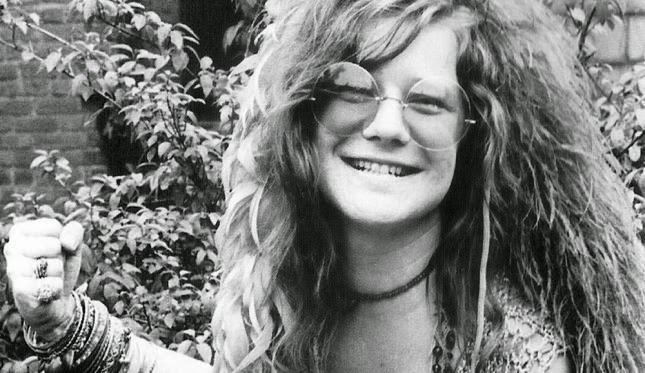
Today is the deathday of Janis Joplin, and tomorrow is the
birthday of my wife, Mary, who early on was a fan of Janis. So, today’s song
forms a tribute to both. It’s the final track on Joplin’s final (and best)
album Pearl. The link here is to Janis and her Full Tilt Boogie Band playing
the song live on the Dick Cavett Show in 1970. Seeing Janis perform is
something in itself. And she’s in really good form on those Cavett appearances,
showing how well she worked with her new band. It’s a shame she only got to
make one album with them and that even on that album there’s one track, “Buried
Alive in the Blues,” that never received its vocal track.

So, “things left thus undone behind me,” to borrow a sentiment—if not the exact words—from Hamlet’s death-speech is something that haunts whenever we talk about those taken prematurely. Though with Janis I won’t say “prematurely.” Pearl shows her fully mature. It’s the album she was always capable of and it’s a great thing—given how little time she had left—that it was made at all. Seeing Janis so gracious and fun on Cavett helps too to make the case that she’s come into her own. I often have the image of her as more shambolic and strung-out than she really was. Let’s not forget she was a professional, the kind of person who can put even someone as uptight as Cavett at ease. There’s a great moment where he’s asking her about a tattoo on her wrist and then touches it. And she sort of lights up as though “Dick’s making his move!” and you can see how encouraging she would be if he wanted to crack that shell and get down with her. But, nope, the moment passes.

Janis was someone who got past a lot of what they used to
call “hang ups.” And when she sang she exorcised plenty of demons. What I like
about her performance of today’s song is how much she lays it all on the line.
While she’s singing, she’s preaching. She means every word: “Don’t you know
when you’re loving anybody, babe / You’re taking a gamble on a little sorrow /
But then who cares, baby? ’Cause we might not be here tomorrow.” That’s the take away not just on the “use it
or lose it” philosophy, but also underscores how ephemeral it all is. Love, don’t
love. It ain’t gonna last—not even if it lasts a lifetime. “Who
cares, baby?”
It’s also good hearing that coming from Janis, since she’s
sort of the patron saint of every woman in an abusive relationship—by which,
she would mean, any in which the woman gets beat-up emotionally by her man. She’s
usually emphasizing that “sorrow” part of the equation more than the “who cares”
part. There’s a fun moment when she surprises Cavett with a very quick and
trenchant interpretation of her symbol for most relationships, which she
characterizes as the mule with the carrot and the cart. Cavett wryly asks what
equates with what—male and female—in that figure and she replies that the man
is holding the carrot to make the mule (the woman) run, “promising something more
than he’s ever willing to give.” Cavett seems struck by the aptness of the
figure, then quips something about suddenly having to defend his entire sex. “Go
ahead,” Janis quips right back.

About the song—it was written by Jerry Ragovy and Mort
Shuman (the guy who, among many songs written, worked on those Jacques Brel
translations I’ve mentioned before) and was a 1966 radio song. Janis takes it
away for her own, and watching her “recover herself” at the song's end, after putting it out there—on talk television, no less!—is affecting. I’m pretty sure I caught at least one of these Cavett appearances
when it occurred because I know I saw her on TV and if wasn’t then, it must’ve
been on Tom Jones. Anyway, it’s still something to see.
Of course, today’s song is all about holding onto the love
of a man, which is conceived of as fairly slippery. And listen to how she
sweetens the “if anybody should come along / He gonna give you love and
affection” and gets so strident and insistent with “I’d say ‘get it while you
can’”—and then that string of “get it, want it, need it, hold it” that
becomes a rather succinct game plan for how to hold onto love, which is what
the song is all about, while always acknowledging that “while you can” implies
that you might not “get it” whenever you want nor for as long as you’d like,
while “want it” and “need it” might also not be permanent states.
Which is all a way of underscoring that it’s truly a
miraculous thing—in its way—if you get it when you want it and can hold it
while you need it. The blues that Janis sings comes from the fact that that so
rarely occurs and then the sorrow seems all there is. But her singing on this song
is as a kind of emotional survival tactic—to not let the losses outweigh the
gains.
Don’t you turn your
back on love